Last updated November 18, 2026
Utilities for an ADU: Water, Sewer, Power and Meters
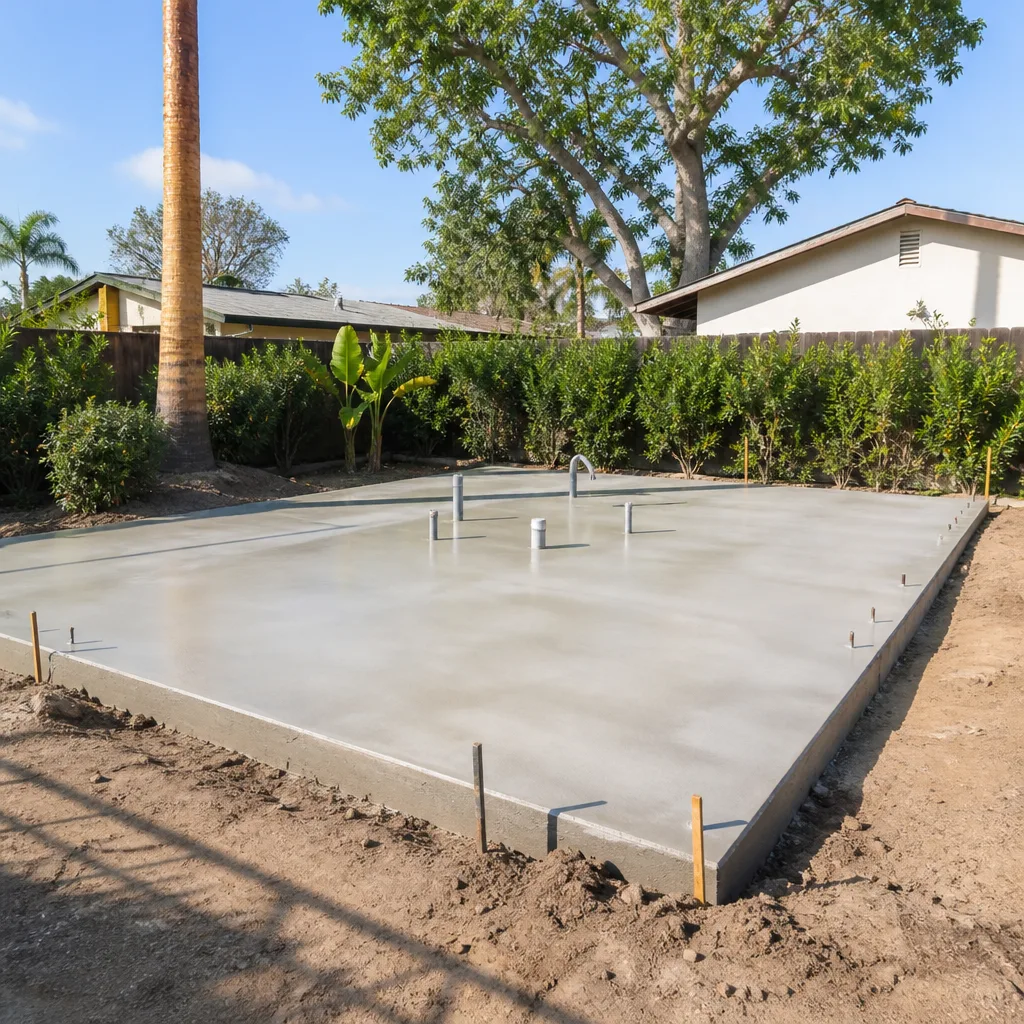
Most homeowners budgeting an ADU spend their energy on the unit itself – the design, the finishes, the question of prefab versus site-built. Then the real surprise shows up in the utility trench. Connecting an accessory dwelling unit to water, sewer, and power in Spring Valley is not one task with one price. It’s three separate processes run by three separate agencies, each with its own queue, its own fees, and its own idea of what “ready” means. The building can be finished and still sit empty while a meter is pending. This guide maps the whole picture: Clark County permits, NV Energy service, and Las Vegas Valley Water District connections, plus how to budget for all of it before you break ground.
Quick Answer
An ADU needs its own utility connections – a water line, a sewer line, and an electrical service – and each one runs through a different agency in Spring Valley: Clark County for building and utility permits, NV Energy for the electrical service and meter, and Las Vegas Valley Water District for water and sewer. The connection work itself is usually a modest part of the total ADU budget; the real cost and schedule risk sits in agency lead times and fees, and in decisions like whether the ADU gets a subpanel off the main house or a separate meter. Plan the utility scope early, confirm requirements with each agency before plans are final, and build the connection timeline into your written estimate.
Table of Contents
- The Three-Agency Coordination Map
- Subpanel From the Main House vs. a Separate Meter
- Sewer Lateral vs. Septic on Spring Valley Parcels
- The NV Energy Interconnection Process
- What “Solar Ready” Really Means
- The Utility Cost Checklist
- Trenching, Timing, and Sequencing
- How to Budget Utilities Before Breaking Ground
The Three-Agency Coordination Map
Say it plainly: no single contractor controls your utility timeline. That’s not a knock on contractors – it’s the structure of how utilities work in this valley. Three agencies each hold one piece of the puzzle, and each has its own process.
- Clark County handles building permits and the utility permits tied to them. The county reviews your plans, inspects the work, and signs off before anything else moves forward.
- NV Energy handles the electrical service connection: the service drop or underground feed, the meter, and final energization of the unit.
- Las Vegas Valley Water District (LVVWD) handles water service and sewer connection requirements, including what it takes to tie the ADU into the existing system.
Each agency has its own queue and fee structure. The county’s review runs on its own timeline, then inspection and sign-off have to happen before NV Energy will set a meter. Meanwhile LVVWD has to confirm the water and sewer connection is viable for your specific parcel. These processes can run in parallel if they’re planned that way, and they can stack up if they aren’t.
This is why utility coordination is where ADU projects lose time. In our experience, homeowners who understand the three-agency structure at the design stage make better decisions about where the unit sits, how it connects, and what it will cost. If you’re just starting to scope your project, our ADU builders walk through the full build sequence, utility work included. The key is treating the utility scope as a design decision, not an afterthought once the shell is up.
Subpanel From the Main House vs. a Separate Meter
The biggest electrical decision on an ADU is whether it draws power from a subpanel tied to the main house or gets its own separate meter. A subpanel works by running a feeder from the main service panel to a new panel in the ADU; the ADU’s power is billed on the main house meter. That’s usually the simpler and less expensive path, and it’s the one many ADU projects use.
A separate meter means the ADU gets its own NV Energy service and its own account. That raises the cost and adds a step to the interconnection process, but it changes the economics of how you use the unit.
When a Subpanel Makes Sense
- Family living in the ADU, where one utility bill for the property is fine.
- A home office or studio where separate billing isn’t needed.
- You want to keep the electrical scope smaller and the connection process simpler.
When a Separate Meter Makes Sense
- You plan to rent the unit and want the tenant to hold their own utility account.
- You want clean separation for billing or recordkeeping.
- Your main panel has no capacity left for an ADU’s load, and upgrading it costs more than a new service.
Whether Clark County will require a separate meter for your specific ADU depends on the unit, the existing service, and local code, so that’s a question to confirm with the county during plan review. We don’t guess at it – we confirm it with the city and county before plans are final. The decision affects both construction cost and the rental income picture, which is why it belongs in the first design conversation, not the last. If your ADU plans include a room addition contractor handling attached square footage rather than a fully detached unit, the subpanel conversation is even more central.
Sewer Lateral vs. Septic on Spring Valley Parcels
Most Spring Valley properties connect to the public sewer system through a lateral – the pipe that runs from the building to the main line in the street. For those parcels, adding an ADU means tying a second waste line into the existing lateral, sizing it correctly for the added load, and having LVVWD confirm the connection meets its requirements.
Parcels near the urban fringe are a different story. Some lots in and around Spring Valley sit where sewer service is limited or absent, and those properties rely on septic systems. Adding an ADU to a septic-served lot raises a real question: can the existing system handle the extra load, and if not, what does the fix look like? That could mean upgrading the system, and it’s not something to discover after the foundation is poured.
How to Sort Out Your Sewer Situation Early
- Confirm whether your parcel is on public sewer or septic. LVVWD and Clark County records settle this quickly.
- If you’re on public sewer, find out where the lateral runs and whether the ADU can tie in without a new connection to the main.
- If you’re on septic, get the system evaluated for the added load before design is final.
- Build the connection requirement into the permit set so the county reviews the real scope.
LVVWD determines connection requirements parcel by parcel, so the answer is specific to your lot, not a general rule. This is exactly the kind of detail a generalist contractor skips. ADU work is all we do, so we go through this checklist on every Spring Valley project that touches a septic-served parcel.
The NV Energy Interconnection Process
Electrical service is the utility step most likely to add waiting time to your ADU schedule. The reason is structural: NV Energy’s service connection work can’t be completed until the county has inspected and approved the electrical installation. The wait happens after construction is finished, which means a completed ADU can sit unoccupied while the meter is pending.
That sequence is worth internalizing because it drives the whole plan. You don’t get to compress the utility tail by finishing the building faster. You compress it by starting the utility paperwork earlier and submitting a clean, accurate service application the first time.
The Interconnection Sequence
- Electrical design is finalized, including the load calculation for the ADU.
- The service application goes to NV Energy with the supporting documents.
- NV Energy reviews and coordinates the service installation details.
- Construction proceeds, and the county inspects the electrical work.
- County sign-off is issued.
- NV Energy completes the service connection and sets the meter.
- The ADU is energized and ready to occupy.
Steps 1 and 2 should happen as early as the design allows. Every week of delay there is a week added to the back end. If your building is prefab – an Abodu or Cover unit, for example – the factory build can move ahead while the service process runs in the background, but the interconnection still gates final occupancy. For a broader look at how all the pieces fit together in this valley, our Spring Valley page is a useful starting point.
What “Solar Ready” Really Means
“Solar ready” gets used loosely, and the gap between what it means on a permit set and what it means for a future installation is where homeowners get disappointed.
On a permit set, “solar ready” usually means the design has left room for solar: conduit pathways, a reserved breaker space, a panel with capacity, and a roof or structure that can support panels. That’s a planning provision. It says the unit is set up so solar can be added later without ripping open walls or replacing the service.
For an actual future installation, “solar ready” has to line up with what the interconnection process requires. If the plan is to add solar down the road, the ADU’s electrical design and its NV Energy service arrangement both need to accommodate that future step. A separate meter changes the conversation about how solar would connect and how the power would be accounted for. None of it is final until it’s coordinated with the utility.
What to Keep on Your List
- Conduit pathways from the panel location to the roof or array location, confirmed during design.
- Panel capacity reserved for a future solar connection.
- A clear note in the design set on whether the ADU will connect through the main house service or its own meter.
- The future solar step factored into the NV Energy interconnection planning, not added after the fact.
Prefab units vary in how much of this groundwork they include, so it’s worth asking the manufacturer directly. For a custom build, the solar provision is a design decision we confirm with the utility before approving the plan set.
The Utility Cost Checklist
Utility costs for an ADU fall into a few categories. None of them are one-line numbers, and the final price is always set by your written estimate – but the categories below show what to budget for so nothing shows up as a surprise.
- County permit and inspection fees. These are set by Clark County based on the project scope and valuation.
- Water and sewer connection fees. Set by LVVWD based on the connection requirements for your parcel. Septic-served or fringe parcels can carry additional costs if the system needs work.
- Electrical service and meter fees. Set by NV Energy for the service connection. A separate meter adds its own cost here.
- Trenching and site work. Running new or extended utility lines to the ADU, including excavation and backfill.
- Panel and wiring costs. The subpanel, the feeder run, and the ADU’s internal wiring, sized to the load calculation.
- Impact or capacity fees. Where the county or water district applies them to a new dwelling unit, budget for them explicitly.
Running cost estimates – the ongoing utility bill – are a separate line. A subpanel means the ADU’s power is on the main house meter; a separate meter means its own account. If you’re counting on rental income, the ongoing billing arrangement affects how you present the unit to a tenant, and the rental rules for ADUs depend on the city and are checked with the city, so confirm them alongside the meter decision.
The right way to budget this is a written line-item quote that separates utility work from construction costs, so you can see exactly what the connections, fees, and permits come to before you commit. That’s how we approach every Spring Valley ADU estimate.
Trenching, Timing, and Sequencing
Utility work is cheap to plan and expensive to redo. The sequencing decisions below are the ones that most often catch projects off guard.
- Trench once, all utilities together. Water, sewer, and power should share the same trench dug at the same time. Digging three times costs more than digging once.
- Confirm the connection points before you dig. Where the existing lateral runs and where the site is dug determine the whole footprint of the ADU. Nail that down at design, not at excavation.
- Get the county’s utility permit scope right the first time. A clean permit set that reflects the real connections avoids review delays and re-inspection.
- Submit the NV Energy service application early. It sits in its own queue; the sooner it enters, the sooner your ADU can be energized.
- Build the utility schedule into the written estimate. The estimate sets the final price and the schedule; the utility connections should be explicit line items, not a vague allowance.
Spring Valley’s climate helps here in one specific way: the ground doesn’t freeze, so trenching and connection work aren’t blocked by a winter construction window. The heat of summer is a work-scheduling consideration, but the utility connections in this valley can proceed year-round. That gives you more flexibility in sequencing than homeowners in colder climates have.
How to Budget Utilities Before Breaking Ground
The utility question should be answered at the design stage, not after the shell is closed. Here’s the process that works:
- Confirm your parcel’s water and sewer situation. Public sewer or septic, and where the connections will run.
- Decide the electrical approach. Subpanel or separate meter, sized to the ADU’s load calculation.
- Confirm the requirements with each agency. Clark County for permits, NV Energy for the service, LVVWD for water and sewer. Confirm before plans are final.
- Get a written line-item quote. Separate utility work from construction, with every connection, fee, and permit spelled out.
- Build the utility timeline into the estimate. The schedule is set in the written estimate, not in a promise made on a phone call.
We offer the choice between premium prefab units from Abodu, Cover, and Dvele and site-built custom construction, so the decision isn’t “which brand” but “which pathway actually fits your lot and your budget.” The utility realities of your parcel often settle that question. Our Casita Builders Spring Valley home page is a good place to start if you’re just beginning to plan, and our technicians have up to 12 years of experience in this kind of work to draw on.
Common Mistakes to Avoid
- Ignoring the three-agency structure. Treating utilities as one task under one contractor means missing which agency holds the timeline and where the real wait is.
- Deciding subpanel vs. meter after design. The meter decision affects cost, the rental income picture, and the county’s review. Make it early, and confirm it with the county.
- Assuming sewer service is guaranteed. Fringe parcels in and around Spring Valley may rely on septic, and the added load has to be confirmed before design is final.
- Thinking solar ready means solar installed. A solar-ready permit set leaves room for solar; it doesn’t replace the future interconnection step.
- Waiting until after inspection to start the NV Energy process. The service connection can’t finish until the county signs off, and that wait happens after construction is done – so start the application early.
- Digging utility trenches separately. Water, sewer, and power should share one trench. Three separate digs cost more and lengthen the schedule.
- Budgeting utilities as a lump allowance. A written line-item quote separating connection fees, meter fees, impact fees, and site work is the only reliable way to budget the full picture.
When to Call a Professional
Utility connections on an ADU involve permitted work on water, sewer, and electrical service – the kind of work that has to be reviewed, inspected, and approved by Clark County and the agencies that own the system. That’s not a DIY job, and figuring out the sequence on your own is a sure way to lose time. Call a professional when you need the electrical load calculation done, when your parcel’s sewer situation is unclear, when you’re deciding between a subpanel and a separate meter, or when you’re comparing prefab and custom and need the utility scope priced into both. Casita Builders Spring Valley offers free estimates in Spring Valley – call (844) 320-4756. We answer 24/7, and fast dispatch runs from 7am to 7pm, Sunday through Friday.
Frequently Asked Questions
Three agencies handle different parts: Clark County for building and utility permits, NV Energy for electrical service and the meter, and Las Vegas Valley Water District for water and sewer connection requirements. No single contractor controls all three, which is why the utility scope has to be coordinated early. Call (844) 320-4756 for a free estimate that separates the utility work from construction costs.
A subpanel off the main house is usually simpler and less expensive and is the common choice when family lives in the ADU; a separate meter makes sense when you’ll rent the unit and want the tenant to hold their own utility account. Whether Clark County requires a separate meter depends on the unit and the existing service, so it’s confirmed during plan review. Call (844) 320-4756 for an exact quote – estimates are free.
The service connection can’t be completed until Clark County has inspected and approved the electrical work, so the wait happens at the back end of the project, after construction is finished. That’s why the service application should be submitted as early as the design allows. To get your ADU timeline built into a written estimate, call (844) 320-4756.
The fees come from three separate sources – Clark County permits, LVVWD water and sewer connection fees, and NV Energy service and meter fees – and the amounts depend on your parcel, the connection requirements, and the project scope. There isn’t a single number, which is why you need a written line-item quote. Call (844) 320-4756 for a free estimate covering all three.
No. Most properties connect through a lateral to the public sewer, but parcels near the urban fringe may rely on septic systems, and LVVWD determines the connection requirements parcel by parcel. On septic-served lots, the existing system has to be confirmed for the additional load before design is final. Call (844) 320-4756 to work through your parcel’s connection situation.
On a permit set, solar ready means the design has left room for solar – conduit pathways, panel capacity, and a structure that can support panels – so it can be added later without opening walls. For an actual installation, the future step still has to be coordinated with NV Energy through the interconnection process. Call (844) 320-4756 to talk through the electrical design for your unit.
The Bottom Line
Utilities are the underestimated part of every ADU project in Spring Valley, and the reason is coordination, not complexity. The work itself is manageable; the schedule risk comes from routing water and sewer through LVVWD, power and the meter through NV Energy, and all of it through Clark County permitting – three queues that only run smoothly when the utility scope is planned at design. Decisions like subpanel versus separate meter, sewer lateral versus septic, and what solar ready actually provides should be settled before the trench is dug. Get all of it priced in a written line-item quote, and the ADU you’re building won’t sit waiting on a meter. For a free estimate, call (844) 320-4756. We answer 24/7, with fast dispatch from 7am to 7pm, Sunday through Friday.
Written by the team at Casita Builders Spring Valley.