Last updated November 18, 2026
How to Hire an ADU Contractor in Spring Valley: A Step-by-Step Guide
In Clark County, any licensed general contractor can legally pull an ADU permit. Read that again, because it’s the whole problem. The credential that homeowners use to filter contractors tells you almost nothing about whether the person holding it has ever walked an accessory dwelling unit from first sketch to final inspection. Hiring a general contractor to build your ADU is a lot like asking a family doctor to perform surgery: technically within their license, practically a gamble with your lot, your budget and your timeline. This guide is built to close that gap. It teaches Spring Valley homeowners the exact questions, license checks and contract language that separate a true ADU specialist from a contractor who added the word “ADU” to the website after 2020.
Quick Answer
To hire an ADU contractor in Spring Valley, verify the contractor’s license classification and standing through the Nevada State Contractors Board, confirm they’ve completed ADU-category work through to final inspection, demand a line-item written estimate with permit fees and milestone dates spelled out, and compare at least three bids on identical scope. The specialist you want will talk fluently about Clark County permitting, prefab versus site-built tradeoffs, and utility coordination before you ever sign. If a contractor can’t answer those specifics, they’re learning on your dime.
Table of Contents
- Why an ADU Specialist Beats a General Contractor
- How to Read a Clark County Contractor License Lookup
- The Five Interview Questions That Expose a Real ADU Builder
- Prefab or Custom-Built: Comparing Your Three Pathways
- How to Compare ADU Bids Apples-to-Apples
- Red Flags in an ADU Contract
- Why Permit Relationships Save Real Schedule Time
- The Step-by-Step Hiring Process
Why an ADU Specialist Beats a General Contractor
An ADU is a small building, but it’s not a simple one. It carries its own utility connections, its own foundation and roof, its own kitchen and bath, and often its own address and meter. That combination is exactly why a generalist struggles: the work touches everything a general contractor does, yet the sequencing, code review and inspection path are unique to accessory structures. A builder who spends most weeks on kitchen remodels and roof replacements has to re-learn that path on your project.
We’ve watched the difference play out in Spring Valley, where lots vary enough in size, slope and utility access that no two ADU projects follow the same script. A dedicated ADU builder brings a mental checklist to every conversation because they’ve run it dozens of times: setback review with the city, utility trench routing, fire separation from the main house, foundation design for the soil, framing inspection sequencing. None of that appears on a generalist’s radar until it becomes a delay.
Here’s the practical case for specialization, framed as a list you can hold a contractor to:
- Code fluency. A specialist knows which parts of an ADU review tend to trigger corrections and plans around them.
- Subcontractor networks built for ADUs. Small-building electricians, plumbers and foundation crews are a different bench than whole-house remodel subs.
- Prefab fluency. Factory-built units from brands like Abodu, Cover and Dvele each arrive with their own site-work, foundation and utility requirements, and a specialist knows how those differ from a stick-built job.
- Single-specialty attention. When 100% of a contractor’s projects are ADU-category work, your job isn’t competing for crew time against a bathroom remodel across town.
That focus is the core of who we are at Casita Builders Spring Valley. Every project we take on is an ADU: a new detached unit, a garage conversion or a room addition. That’s the whole scope, and it’s deliberate.
How to Read a Clark County Contractor License Lookup
Start every contractor search the same way: pull the license on the Nevada State Contractors Board website and read the classification, not just the status. A license that reads “active” tells you the contractor is in good standing. The classification tells you what scope they’re actually qualified to perform, and that’s where the real signal lives.
You’ll see a range of classifications on that lookup, and the one that shows up most often on ADU residential work is the B-2 residential and small commercial classification. A B-2 covers construction of residential structures and small commercial buildings, which is the category an accessory dwelling unit falls into. You may also encounter general building classifications that allow broader commercial work, or specialty trade licenses limited to a single trade. A specialty license is a red flag if the company is presenting itself as your full ADU builder; a plumbing-only license can’t deliver a finished unit.
Here’s what to check on the lookup, in order:
- Status. Active means the license is current. Suspended, expired or revoked means stop.
- Classification. Confirm the class matches residential construction at the scale of an ADU. B-2 is the common fit.
- Qualifying individual. Every license carries a named qualifier who passed the trade exam. Ask who that person is for your project and whether they’ll be on site.
- Disciplinary history. The board posts citations and complaints. Read them; a pattern of unlicensed-activity citations is disqualifying.
- Bond and insurance status. Verify the contractor’s bond is current at the time you sign. Ask for a certificate of insurance naming you as an additional insured on the general liability policy.
Keep the lookup screenshots in your file. If a contractor can’t produce a license number for you to verify, that’s the end of the conversation. If you want to understand how this licensing landscape looks right here, our Spring Valley page lays out the local picture.
The Five Interview Questions That Expose a Real ADU Builder
A true ADU specialist answers these five questions without pausing to look anything up. A generalist hedges. Print this list and take it to every interview.
- “Walk me through an ADU plan review in Clark County from submittal to permit issuance.” A specialist describes the sequence: which drawings the city wants, how plan check comments typically come back, what triggers a resubmittal. A generalist says “our expediter handles it” and can’t tell you what an expediter does.
- “How many ADUs have you taken from permit to final inspection, and can you show me one that’s finished?” The answer should include a real walkthrough offer or a reference list of past clients. Vague answers about “similar projects” are a tell.
- “If my lot has a utility easement running through the back corner, how does that change the design?” This one separates the specialists. Easement location often reshapes where a unit can sit, and a builder who’s never dealt with it won’t know what to check with the city.
- “Compare a site-built ADU to a prefab unit from a brand like Cover or Dvele for my situation.” A specialist can present both honestly, including where prefab wins on schedule certainty and where site-built wins on matching an existing home. A contractor who only offers site-built will tell you prefab doesn’t work. One who only sells prefab will tell you site-built is a waste.
- “What does your contract say about allowances, and what happens if my finish selections come in over?” The answer should describe a written process: allowance amounts stated as line items, how overages are approved in writing before work continues, and a change order signed before the change happens. If the answer is a shrug, walk.
We answer these questions every week for Spring Valley homeowners, and the honest answer on question four often surprises people. Prefab or custom-built, we do both, and we’ll tell you which fits your situation. That’s the point of a single-specialty builder that carries pre-existing relationships with Abodu, Cover and Dvele alongside a site-built scope.
Prefab or Custom-Built: Comparing Your Three Pathways
One of the biggest mistakes in hiring an ADU contractor is signing before you’ve compared the delivery methods. There are three real pathways, and each one suits a different lot and goal.
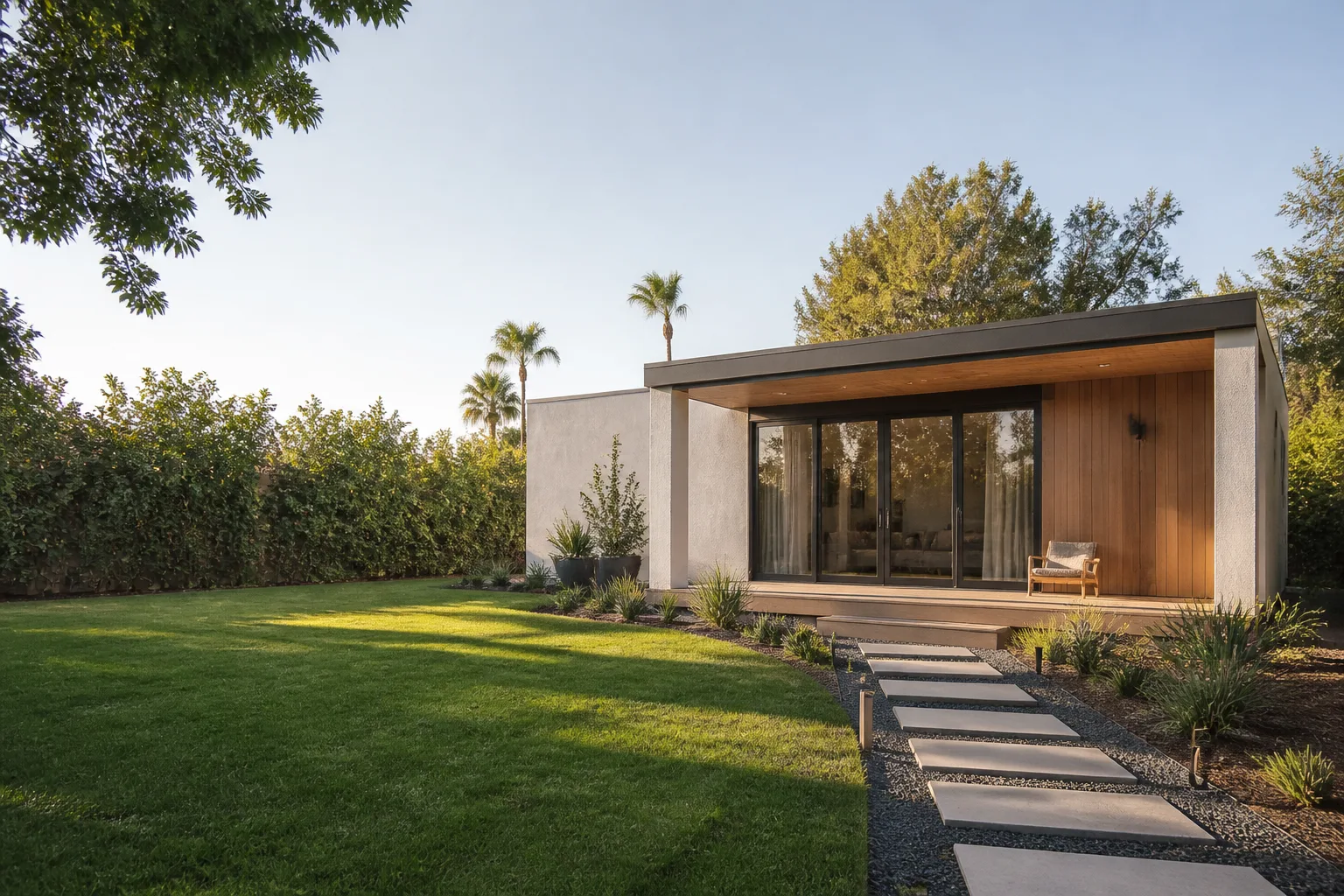
- New detached ADU (site-built). You get full design flexibility, a unit that can match your existing home’s architecture, and total control over layout and finishes. The tradeoff is that construction happens on your lot, so schedule is exposed to weather and inspection sequencing.
- Garage conversion. You’re reusing an existing structure, which usually means less foundation and framing work. The catch is that the conversion has to meet the same habitable-space standards as a new unit: insulation, egress, utility capacity, and the question of where the cars go. A conversion is a real estate decision as much as a construction one.
- Prefab unit. Factory-built brands like Abodu, Cover and Dvele construct the unit off site and set it on your foundation. The design language is polished and consistent, the schedule is more predictable, and site work becomes the main variable. Prefab isn’t a shortcut on permitting; your city still reviews the site plan and utility connections.
Here’s the comparison, laid out as a working table of what actually differs:
- Design control: site-built and garage conversion offer the most; prefab offers a curated set of plans.
- Schedule predictability: prefab is generally tighter because factory build time isn’t exposed to site weather; site-built and conversions depend on crew sequencing and inspection windows.
- Site variables: conversions depend on the garage’s existing structure; prefab depends on foundation and crane access; site-built depends on everything.
- Fit with your goal: a rental-focused unit often leans prefab for efficiency; a multigenerational unit for a parent often leans site-built to match the main home and to layer in accessibility features.
When someone asks us which path is right, the honest answer is that it depends on the goal. An ADU builders team that only offers one pathway is telling you something about the answer before you ask the question.
How to Compare ADU Bids Apples-to-Apples
Low bids on ADU projects rarely stay low. The line items that disappear from a cheap quote are the exact items that reappear as change orders once the foundation is poured and you’re committed. Comparing bids means comparing identical scope, line by line.
Demand each bid in the same format, with the following categories listed and priced separately:
- Design and engineering. Architectural drawings, structural engineering, energy compliance documentation.
- Permit fees and expediting. The actual city fees, plus any third-party plan review or expediting line. This line should never be a singular dollar figure labeled “permits” with no breakdown.
- Site work and foundation. Grading, excavation, utility trenching, foundation type and design, crane access if a prefab unit is being set.
- Structure and shell. Framing, roofing, windows and doors.
- Systems. Electrical, plumbing and mechanical, including the utility connection method and whether a new meter or panel upgrade is included.
- Finishes. Kitchen, bath, flooring, paint, with allowances stated as explicit dollar figures.
- Landscaping and site restoration. Grading restoration, fencing, driveway repairs, and cleanup.
- Milestone schedule. Dates for permit issuance, foundation, framing inspection, and final inspection. A bid with no dates is a bid you can’t hold anyone to.
Use this as your apples-to-apples checklist. If one bid has a line that another doesn’t, ask the low bidder where that work is accounted for. The answer will either be a real number or an uncomfortable silence. And always require a written estimate in which the final price is set; a range floating in an email isn’t a bid.
Red Flags in an ADU Contract
The contract is where a lot of ADU projects quietly go sideways. Read it carefully before you sign, and watch for these specific patterns.
- Lump-sum allowances. “Allowance for finishes: $20,000” is fine only if it’s a line item you can compare. “Finish allowance included in contract price” with no figure is a red flag. It gives the builder room to adjust later.
- No permit clause. The contract should state explicitly that the contractor will pull all required permits in their name, that permit fees and plan check fees are itemized, and that the contractor is responsible for passing inspections. A contract that’s silent on permits leaves the burden on you.
- Vague or missing timeline. Every ADU contract should list milestone dates, not just a total duration. If the only schedule language is “approximately X weeks,” the contract has no teeth.
- No change-order process. Written change orders signed by both parties before the change happens should be spelled out. If change orders are described only “as needed,” you’ve lost control.
- Payment tied to calendar dates rather than milestones. Payments should follow verified progress: permit issued, foundation poured, framing inspected, drywall complete, final inspection passed. Calendar-based payments don’t match the actual work.
- Warranty language that isn’t specific. Ask for the workmanship warranty in writing, with its term and what it covers. “Standard warranty” as a phrase means nothing without the actual document.
If a contractor pushes back on any of these, that’s the most useful information you’ll get during the entire hiring process. A builder with nothing to hide has already written a contract that covers them.
Why Permit Relationships Save Real Schedule Time
Plan review is the single biggest source of unknown schedule risk on an ADU, and a specialist’s relationship with the jurisdiction doesn’t eliminate the process. What it does is compress the friction. A builder who has regularly submitted ADU plans knows which reviewers ask which questions, how plans in this area tend to be formatted, and where an ADU-specific issue (fire separation, utility easement, foundation design) will likely get flagged. They design the plans to preempt corrections instead of absorbing a resubmittal cycle.
There’s a second relationship that matters just as much: inspectors in the field. A builder who has walked many ADUs through the inspection sequence knows how each stage needs to be staged before the inspector arrives, what documentation gets checked, and where a small correction at framing can be handled same-day versus turning into a re-inspection. We’ve watched small ADU builders win weeks of schedule on this alone, and it never shows up in a bid comparison.
This is not a claim that permits move faster because a builder knows somebody. It’s that familiarity with a process is a real asset, and a builder who has only done one or two ADUs in Clark County is paying tuition on your project. Ask directly: “How many ADU permits have you pulled in Clark County, and in the last two years?” Then ask for the addresses. A specialist can rattle them off.
The Step-by-Step Hiring Process
Here’s the whole hiring sequence in order, so you can run it once and stop comparing spreadsheets at midnight.
- Define your goal. Write down what the unit is for (rental income, multigenerational family, home office) and the target cost you want to stay under. This shapes every choice that follows.
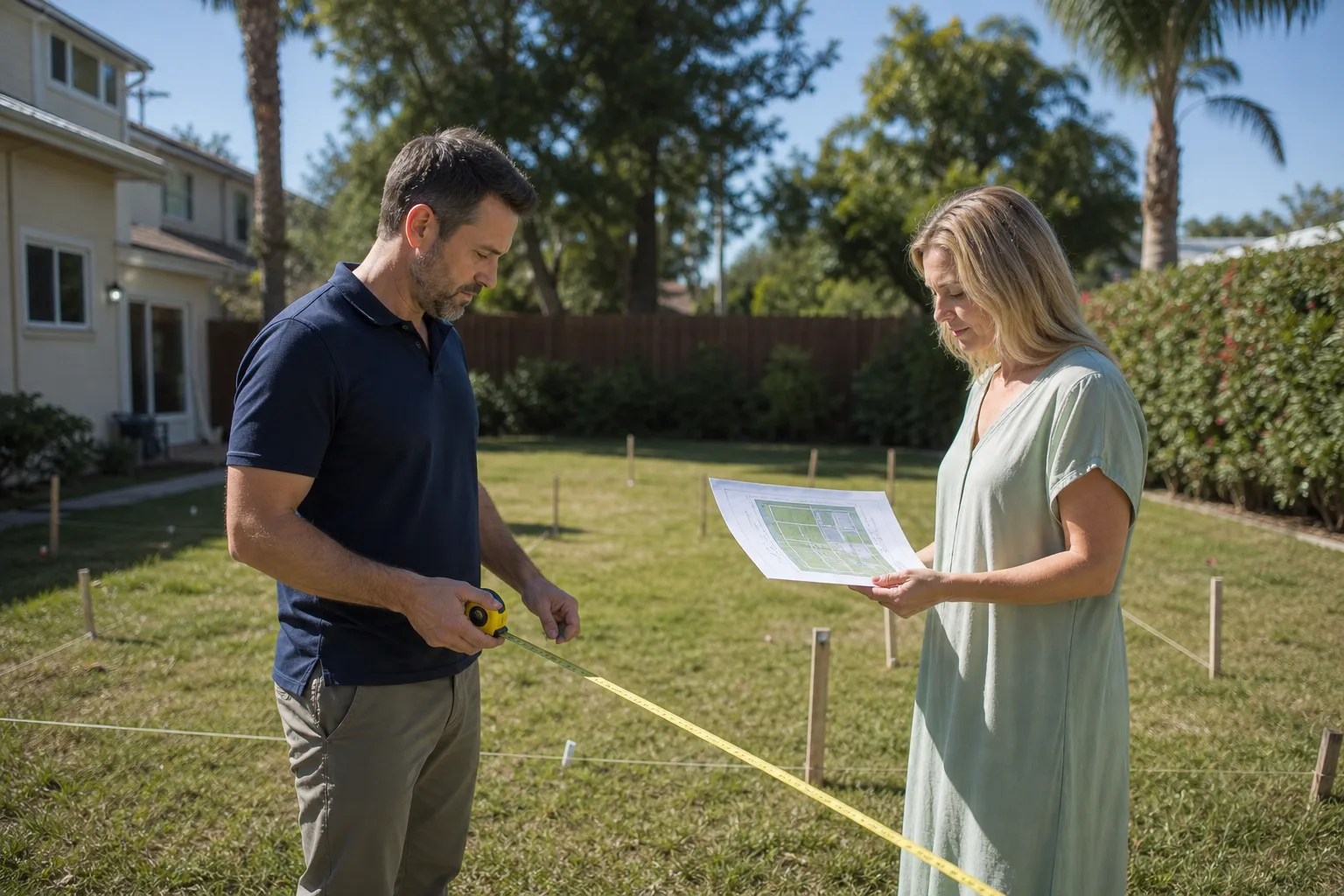
- Check your lot. Before calling anyone, pull your parcel information and note lot size, existing structures, easements and the location of the main house’s utilities. This is the single most useful prep work you can do.
- Verify licenses first. Pull every contractor’s license on the Nevada State Contractors Board site before the first call. Confirm active status, classification, and bond/insurance.
- Interview at least three. Use the five questions above on each. Listen for specifics about Clark County permitting and utility coordination.
- Request identically formatted bids. Give each contractor the same list of categories and require each line item priced separately. Written line-item quotes or no bid.
- Compare line by line. Use the eight-category list above. Where a bid is missing a line, ask where the work is accounted for.
- Check references. Ask for two past clients whose ADUs are finished and one whose project is mid-construction. The mid-construction one is the most honest conversation you’ll have.
- Read the contract before you sign. Permits in the contractor’s name, milestone schedule, change-order process, warranty in writing, milestone-based payments.
- Confirm the final price. Make sure the written estimate is signed and itemized. The written estimate sets the final price.
That’s the process. It’s not complicated, but it does require you to slow down and ask real questions. The homeowners who skip it are the ones who end up posting about a change order surprise six months in. If your project involves expanding the footprint rather than a detached unit, our room addition contractor page covers that pathway separately.
Common Mistakes to Avoid
- Choosing on total price alone. A bid that’s meaningfully lower than the others almost always has a line item missing, and that line item becomes a change order halfway through foundation. Compare identical scope, not totals.
- Skipping the license verification. In Clark County, an active license is a low bar, but an inactive one is disqualifying. Pull the lookup yourself before signing; don’t take a screenshot from the contractor as proof.
- Hiring a generalist because they built a nice house nearby. A beautiful whole-house remodel tells you the builder knows residential construction. It doesn’t tell you they’ve navigated ADU permitting, small-building inspections or utility tie-ins.
- Accepting verbal schedule promises. “Probably about six months” is not a schedule. Milestone dates in the contract are a schedule.
- Ignoring the utility capacity question. If the main house panel is near capacity, the ADU may require an electrical upgrade. A bid that doesn’t address it will become a change order. Ask every contractor to confirm capacity before they quote.
- Choosing prefab without site comparison. A prefab unit is efficient when the foundation, crane access and utility routing line up with the design. A builder who presents prefab and site-built side by side gives you a real comparison. A builder who only sells one is steering.
- Missing the final inspection line. Some low bids end at substantial completion. The contract needs to state who’s responsible for passing final inspection and signing the close-out, and it needs to be the contractor.
When to Call a Professional
There’s a DIY mindset that works for a fence, and then there’s an ADU. The moment your project involves a structural change to your garage, a new utility connection, a foundation on slope, or a prefab unit that needs to be set by crane, you’ve crossed into work that has to be done by a licensed and insured building professional. Add the permitting layer and the inspection sequence and the case for a professional is overwhelming.
Call a specialist if any of the following applies: your local jurisdiction has asked for engineered plans, your lot has an easement you haven’t yet resolved, you’re planning a garage conversion that takes the only covered parking, or your goal involves a unit that has to pass a final inspection before it can be rented. Each of those situations is where the wrong contractor costs the most. Casita Builders Spring Valley offers free estimates in Spring Valley – call (844) 320-4756. We answer 24/7, and dispatch runs Sunday through Friday, 7am to 7pm.
Frequently Asked Questions
Yes. ADU construction in Clark County requires a licensed contractor, and the permit has to be pulled in the name of the person holding the license. Pull the contractor’s license through the Nevada State Contractors Board and confirm the classification matches residential building at the scale of an ADU, generally a B-2, before you sign anything. Call (844) 320-4756 for a free estimate – estimates are free.
A B-2 classification on the Nevada State Contractors Board lookup designates a residential and small commercial building contractor, which is the class that fits an accessory dwelling unit. The classification tells you what scope they’re qualified to perform. A specialty-only license, such as plumbing or electrical, is not a full ADU builder and shouldn’t be presented as one.
Require each contractor to submit a written line-item quote in the same format, with permits, site work, foundation, structure, systems, finishes, landscaping and milestone schedule priced separately. Where a bid has a missing line, ask where that work is accounted for. The written estimate sets the final price, so get the final price in writing before you sign.
A prefab ADU (brands like Cover and Dvele build these) is constructed in a factory and set on your foundation, which usually gives a more predictable schedule. A site-built ADU is constructed on your lot, which gives you the most design control and the option to match your existing home. We can present both side by side so you decide on the facts. Call (844) 320-4756 for a free estimate.
Yes. A garage conversion reuses an existing structure, which often means less foundation and framing work. The conversion still has to meet habitable-space standards for insulation, egress and utility capacity, and the plan has to address where the cars will go. Whether it’s the right path depends on your lot and goal, not just the existing walls. Call (844) 320-4756 for a free estimate.
Ask the five interview questions: how they walk a Clark County ADU plan review, how many ADUs they’ve taken to final inspection and how many in the last two years, how an easement changes design, how they compare prefab to site-built for your lot, and how allowances and change orders are handled in their contract. A specialist answers all five without hesitating. A generalist hedges. Call (844) 320-4756 for a free estimate.
The Bottom Line
In Clark County, the license is the floor, not the bar. The contractor who can walk a Spring Valley ADU from permit to final inspection, verify their classification through the state board, hand you a line-item written estimate with milestone dates, and explain honestly whether a prefab unit or a site-built unit fits your lot is the one worth hiring. Verify the license. Ask the five questions. Compare identical scope. Read the contract before you sign. The few hours you spend on that sequence protect a project that runs for months. Casita Builders Spring Valley builds ADUs and nothing else, offers Abodu, Cover and Dvele alongside site-built pathways, and hands you a free estimate you can hold us to. Call (844) 320-4756. We answer 24/7, with fast dispatch from 7am to 7pm, Sunday through Friday.
Written by the team at Casita Builders Spring Valley.